

Your name comes out first.
- 01your-site.com
- 02
- 03
- 04
Cited in


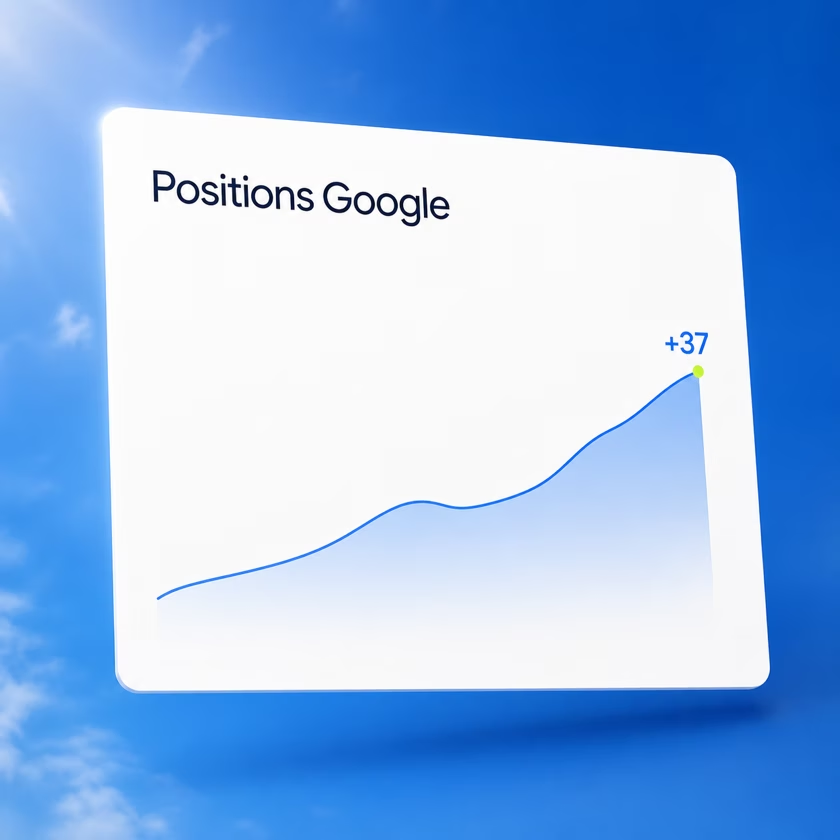


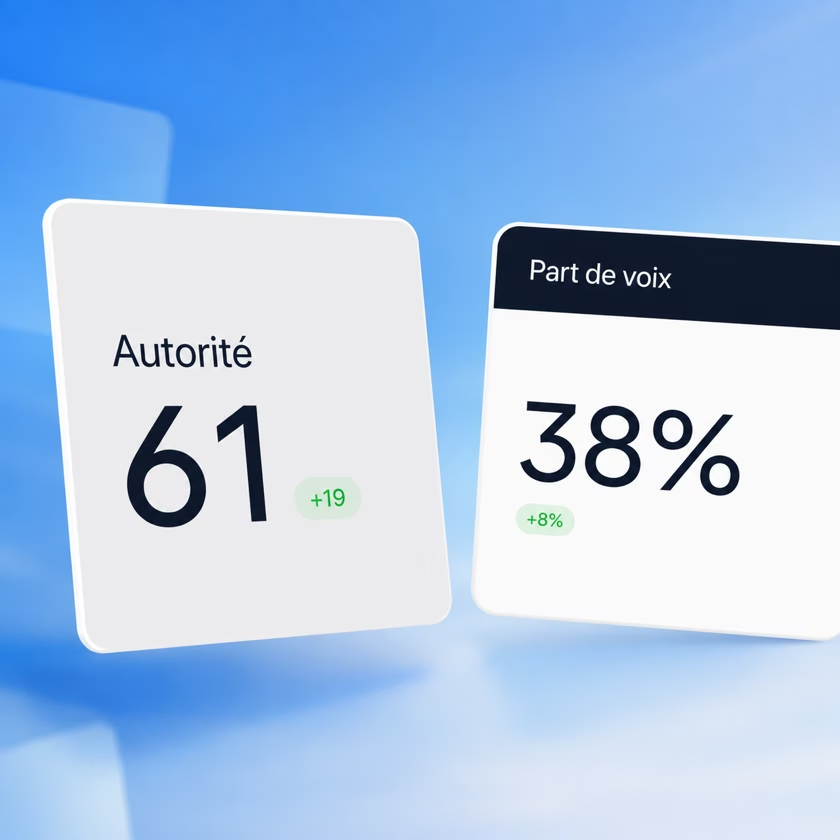
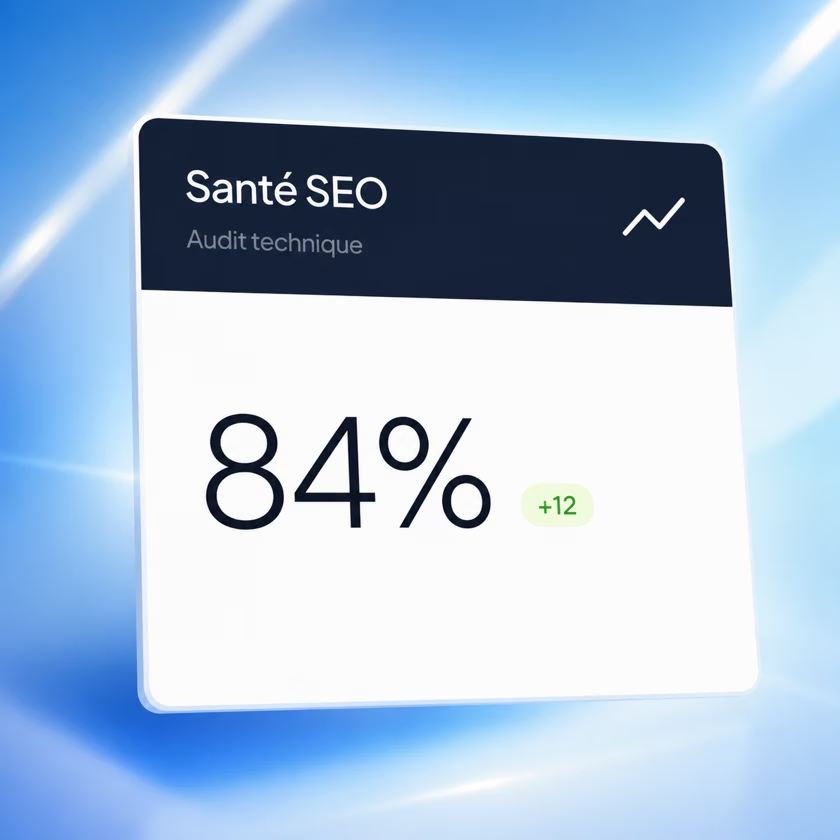


Refunded if your numbers haven't improved after 120 days

 how many customers you lost
  yesterday
Almost one customer in two now asks an AI which business to choose.
Not Google. They ask in plain words, like a person.
None is yours: a model only cites what it has read.
They have their answer. They'll never visit your site.
Nothing in your analytics will tell you.
Free, no account, results in 30 seconds.
GetRerank publishes the articles AI will cite on your own site.
The ones your customers actually ask AI, in your trade and your area.
Full articles, checked sources, images included. Straight onto your site.
Your name appears in the answers. You track the climb week by week.
Your involvement across those three steps: none.
MenuiserieAI is cited by Google's AI Overview on its industry queries.


GetRerank produces the substance, the structure, the sources and the visuals. Scroll this example like a real blog.
A concrete method to compare the options, frame your budget and pick a CRM the team will actually use.
The best CRM for a small business isn't the one with the most features: it's the one that covers your priority workflows, connects to your tools and stays simple enough to be adopted. Run three real scenarios, work out the total cost over three years, and check both security and how easily you can get your data back out.

A CRM centralises useful information about customers and prospects, helps track opportunities and can automate some sales tasks. But the project fails fast if the requirements simply reproduce every existing habit. Describe three concrete workflows first: handling a new lead, chasing a quote, and handing a won customer over to the team that will look after them.
For each one, note who is involved, what data is needed, which event triggers the next step, and which indicator tells you it worked. The FTC's guidance on handling customer data is a useful frame here: know what you collect and why, before you pick the tool that will hold it.
| Criterion | Validation question |
|---|---|
| Adoption | Can the team understand the pipeline in under 30 minutes? |
| Features | Does the CRM cover your 3 priority sales processes? |
| Integrations | Do email, calendar, forms, invoicing and support all sync? |
| Data | Are import, de-duplication and required fields under control? |
| Security | Are access, logs, backups, hosting and the contract documented? |
| Total cost | Have you costed licences, migration, setup, training and maintenance? |
| Mobile | Is the experience still effective on a phone and away from the office? |
| Reporting | Do the dashboards answer the decisions you make each week? |
| Exit | Can you export all your data in a usable format? |

A CRM holds personal data about your customers and prospects. The UK ICO's guidance is a good baseline whatever your jurisdiction: collect only what you need, tell people what you hold, set retention periods, and apply security measures that fit the risk. For a SaaS service, also ask where the data is hosted, how access is managed, how an incident gets notified, and what happens when the contract ends.
The real test: ask the vendor to show you a full export of a demo account, and the deletion procedure. A promise of portability has to produce a file you can actually use.
Put together a small group spanning sales, marketing and admin. Import a cleaned sample, then run the three priority scenarios with no help from the vendor. Measure how long it takes, the workarounds, the errors and the questions. Finally, ask each tester what they'd still do in a spreadsheet: that answer usually reveals the real friction.
Adjust the weights to your context, but keep exactly the same grid for every option.
Compare the offers over an identical period. Multiply the monthly price by the number of users and by 36 months, then add migration, setup, training and support. Include the cost of paid connectors and the time spent each month administering the tool. A cheaper licence can cost more if it forces manual work or a contractor for every change.
Separate what's essential at launch from what can wait. The first phase should cover the three priority workflows, the minimum data, and the dashboards that actually get read. This discipline cuts the initial budget and stops you configuring features before you know they'll be used.
Users, modules and contact tiers
Import, cleaning, configuration and training
Support, connectors and internal admin
Prepare the data in week one, configure one priority flow in week two, have a pilot group test it in week three, then open access to the team in week four. Every stage needs an owner and a condition for sign-off. The rollout isn't finished when the accounts are created: it's finished when the information is reliable enough to decide on, and the important actions are tracked in the CRM.
For the first 60 days, track four simple indicators: active users, opportunities with no next action, time to handle a new contact, and the share of required fields correctly filled in. Then hold a short review with the teams. Delete the useless fields, fix the automations that create noise, and write down the rules that prevent duplicates.
Pick the option that gets through your real scenarios with the least friction, documents its security clearly, and lets you take your data back. A good CRM should make sales work more visible within the first few weeks, not promise an abstract transformation in six months.
The licence price is only part of the budget. Add migration, setup, connectors, training, support and admin time over three years.
Nationality isn't a sufficient criterion. Check hosting, any transfers, the contract, the sub-processors, security and export options.
It depends on scope and data quality. A limited first flow can go live quickly, then be extended once usage is confirmed.
Your articles rank on the searches that bring in customers, not on decorative keywords.
Your brand comes up among the most recommended.
When someone asks ChatGPT about your field, your name is the one that comes out.
Score before publishing
4 of 4 checks passed
Checked sources, sourced figures, controlled structure. Every article is scored before it goes live.
One subscription, one invoice, however many markets. Elsewhere, every site is billed separately.
GetRerank doesn't translate your articles. It rewrites them from what people actually search in each country.
Same topic: running shoes
meilleures chaussures running femme
“best”: they want a rankingzapatillas running mujer amortiguación
“cushioning”: they want the technologylaufschuhe damen test
“test”: they want a head-to-headEach language counts as one market. Three markets included from the Pro plan.
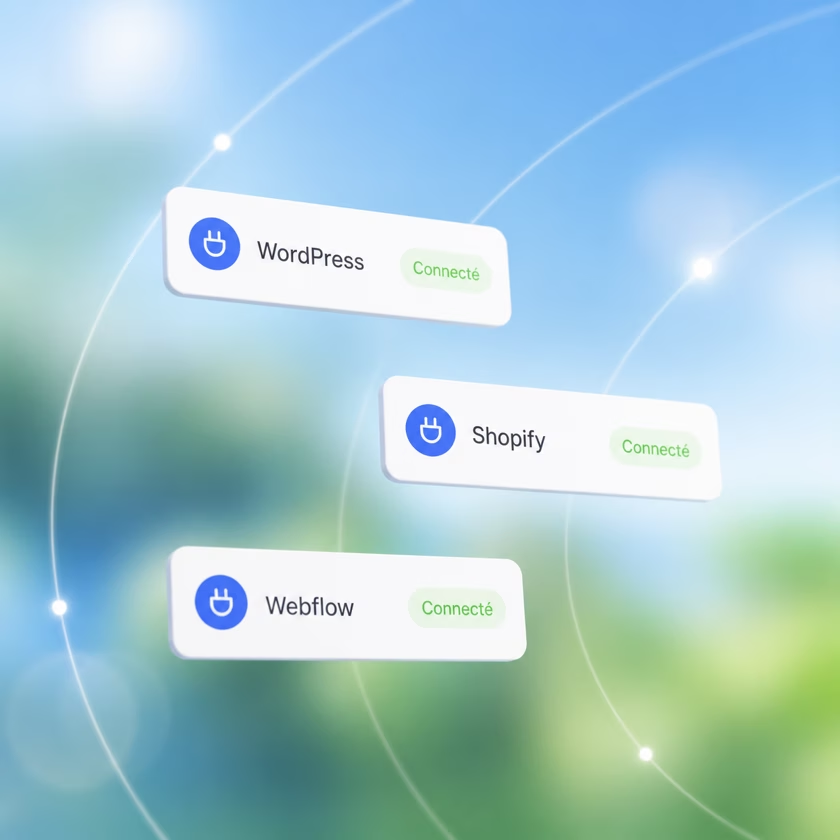
One connection, five minutes, and you never touch it again.
 WordPress
 Shopify
 Webflow
 Wix
Wix Squarespace
 Ghost
Ghost Framer
 WooCommerce
 PrestaShop
 BigCommerce
 Drupal
 Joomla
 TYPO3
TYPO3 Umbraco
 Craft CMS
 Contentful
 Sanity
 Strapi
 Directus
 Payload
 HubSpot
 Notion
 Blogger
And any other site via webhook.
Whether your site came out of Lovable, Cursor, Replit or your developer's head, we host your blog on your own domain. Free of charge.
 Lovable
 Base44
 Claude
 Codex
Codex Cursor
 Replit
No commitment. Refunded if your traffic hasn't grown after 120 days.
First access opens in September. Founder pricing for everyone on the list.
€41/month
that's €490 per year
For one site, one market.
€83/month
that's €990 per year
For anyone with several sites or several countries.
Elsewhere, 3 sites = 3 subscriptions, so €249.
€241/month
that's €2,890 per year
For running your clients' sites.
Google penalises content with no value, not AI-assisted content. That's in its own guidelines. It's exactly why every article goes through real research, a source-by-source check and a score before publishing. We publish less than the others, on purpose.
No. That's the whole point. You can switch on draft mode if you'd rather approve first, but nothing requires it.
The first movement shows around 6 to 10 weeks, meaningful results around 4 months. That's the pace of SEO and nobody escapes it. If nothing has moved after 120 days, we refund you.
We measure your organic clicks in Google Search Console before starting, then again in month 4. If they haven't grown, you get a full refund. All we need is your site connected from day one and the articles actually published.
We host your blog on your own domain, included in the subscription.
Yes, and that's our main difference. Three markets from the Pro plan, ten on Agency. Most tools bill each site separately.
Yes. Each language counts as one market. Articles are written from what people actually search in that country, not translated from English.
Entirely. They're published on your site, under your name. If you leave, you keep everything.
Yes, in one click from your account, no commitment and no reason to give.
A small French team. When you write to support, the person who answers is someone who built the product.
Another question? Write to us. We usually reply the same day.
No credit card.